A Pacific Northwest wine discovery!

The Pacific Northwest is a stunning region of mountains, forests, beaches, breathtaking views and so much more, including many vineyards. The area comprises Washington, Oregon, Idaho and British Columbia, along with parts of southeast Alaska and western Montana.
Volcanic origins
The region will be of interest to anyone who loves wines of volcanic origin, as a combination of volcanic activity and ice age floods created the basalt-rich, diverse soils in much of eastern Washington and northern Oregon.
The range of wines produced in this part of the USA is diverse and many are of premium quality. This should come as no surprise given that Washington and Oregon lie at a similar latitude to Bordeaux and Burgundy.
Washington State
Washington State has excellent conditions for growing grapes with large day/night temperature shifts that promote ripe fruit whilst retaining good levels of acidity. Most vineyards lie in the east, a semi-arid area that sees up to 17 hours of sunlight during the growing season.
More than 80 grape varieties are grown here, with Cabernet Sauvignon, Merlot, Syrah, Chardonnay and Riesling accounting for over 80% of production each year. There are more than 1,050 wineries, 90% of which are family-owned and make fewer than 5,000 cases a year, and in excess of 24,000 hectares of vines planted.
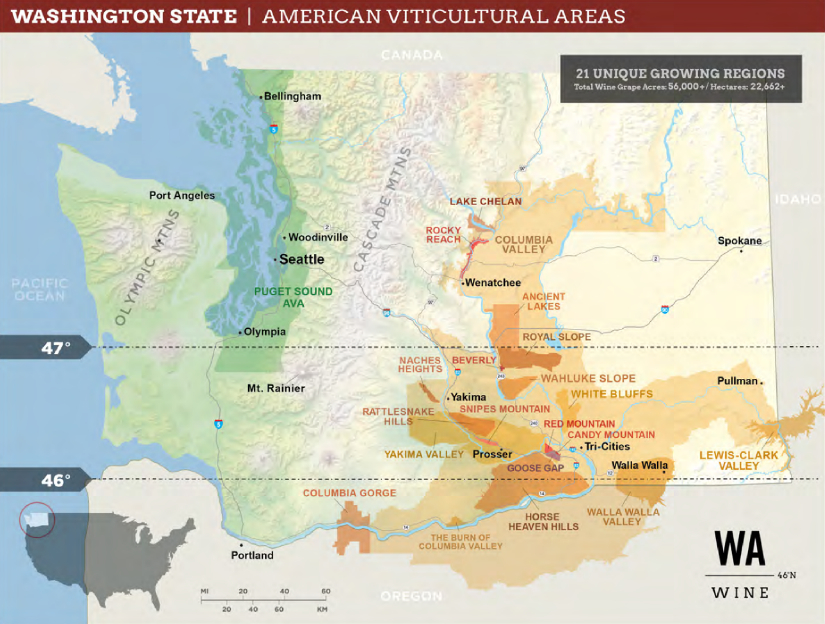
Image credit: Washington State Wine Commission
Columbia Valley
The Columbia Valley AVA (American Viticultural Area) covers around 4½ million hectares across the centre of Washington State and contains several sub-appellations. Established in 1984, it's Washington's largest growing region, encompassing 99% of the state's wine grapes.
The valley lies in a rain shadow, protected by the Olympics and Cascades mountain ranges. As a result, Washington experiences much less rainfall than many other wine regions, particularly in the semi-arid and warm eastern part. Therefore, irrigation is widely used. Vineyards benefit from long, hot sunny days, cool nights, large diurnal shifts and low rainfall plus well-drained and fertile, volcanic soils with sandy loam, silt and loess.
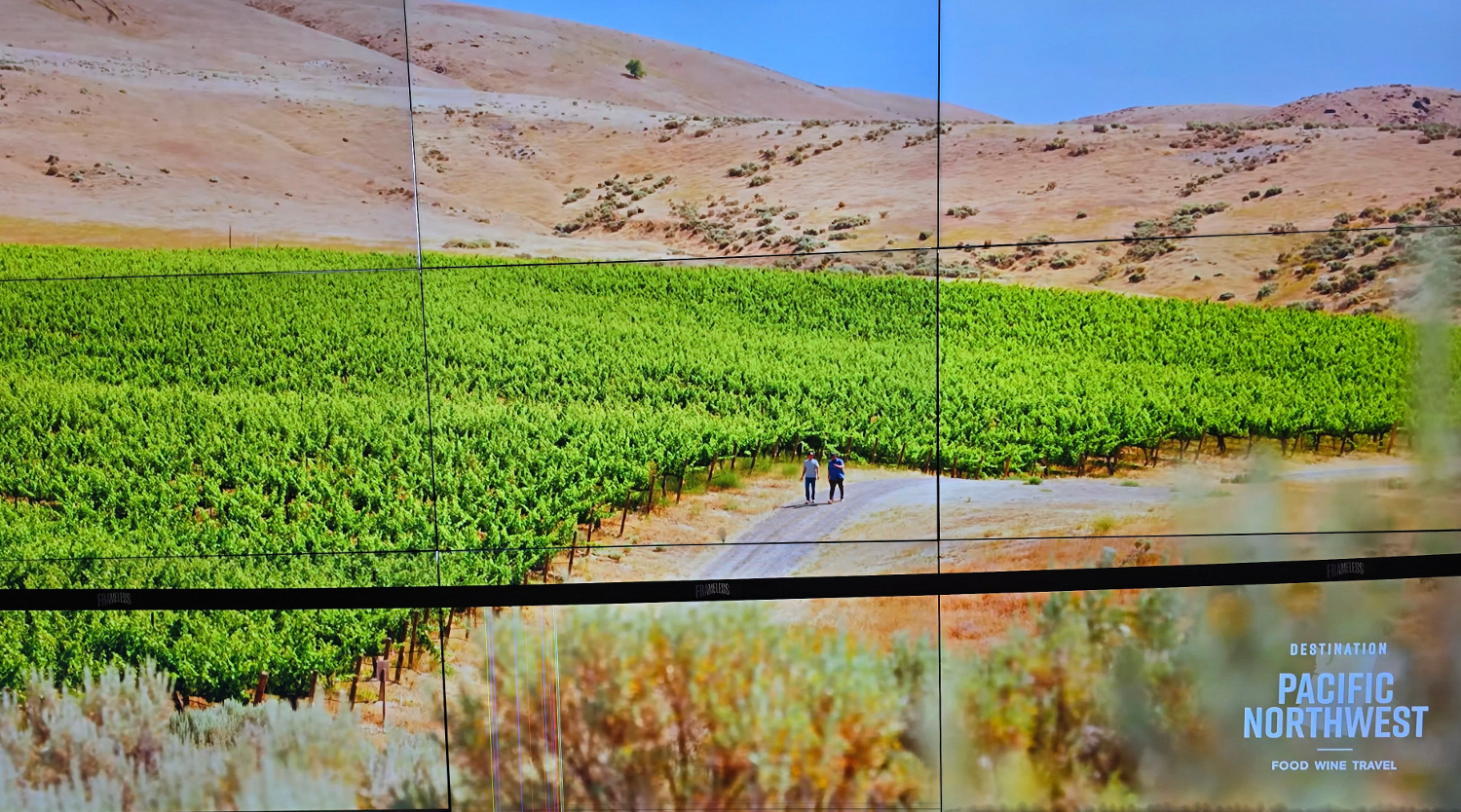
Pacific Northwest vineyard in a semi-arid desert environment
Nearly all of Washington's other grape-growing regions are sub-appellations of the Columbia Valley. Two of the most well-known are the Yakima Valley and the Walla Walla Valley.
Yakima Valley
The Yakima Valley is particularly well known to beer lovers as it produces over 70% of hops grown in the United States and around a third of all hops globally. It is home to a wide variety of fruit and vegetable crops and has over 90 wineries. Around 30% of Washington's vines are planted here and the Yakima Valley was established as Washington's first AVA in 1983. Unusually for the area, there are more white varieties planted than red.
Walla Walla Valley
The Walla Walla Valley might sound like a town in Australia, but it's actually in the south-east of Washington, containing the highest concentration of wineries in the state, and also straddles northeast Oregon. The AVA, which originated in 1984, today covers around 1,190 hectares of vineyards (5% of Washington's grapes), split between six districts and over 130 wineries. Some of Washington's oldest wineries are located here.
A celebration of Pacific Northwest food, wine and tourism at Frameless London, the largest permanent multi-sensory experience in the UK
Oregon
Oregon lies south of Washington and north of California. Like Washington State, its rivers and mountain ranges, along with the Pacific Ocean, provide cooling breezes, some protection from climate extremes and, importantly, rain shadows in the wine regions.
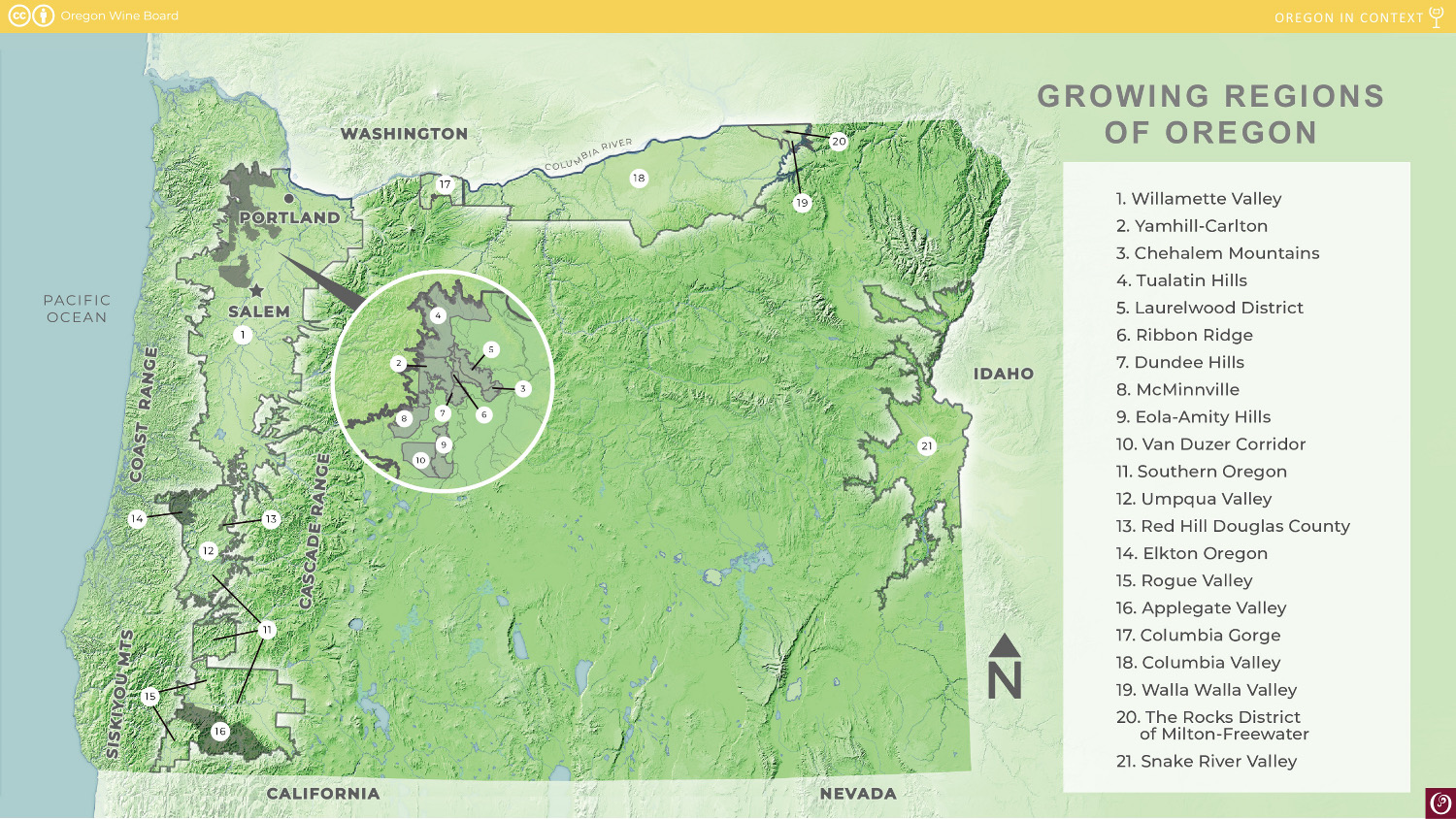
Image credit: Oregon Wine Board
The number of wineries and vineyards here have increased markedly in the last 25 years and there are now over 19,000 hectares of vines in the state. While 72 varieties of wine grapes are grown in Oregon, Pinot Noir accounts for 59% of plantings and much of the region's growing reputation for premium wine.
Oregon's terroir lends itself to growing high quality grapes. Soils primarily comprise ancient marine bedrock and sediments, volcanic basalt rich in clay, iron and magnesium, and wind-blown loess. Vineyards also benefit from long, warm, sunny days and cool nights during the growing season, while rain is mainly concentrated in the winter. Small, artisan producers making fewer than 5000 cases per year account for 70% of all Oregon's wineries and 47% of vineyards are certified sustainable.
Oregon has 23 American Viticultural Areas and the oldest is the Willamette Valley, established in 1983.
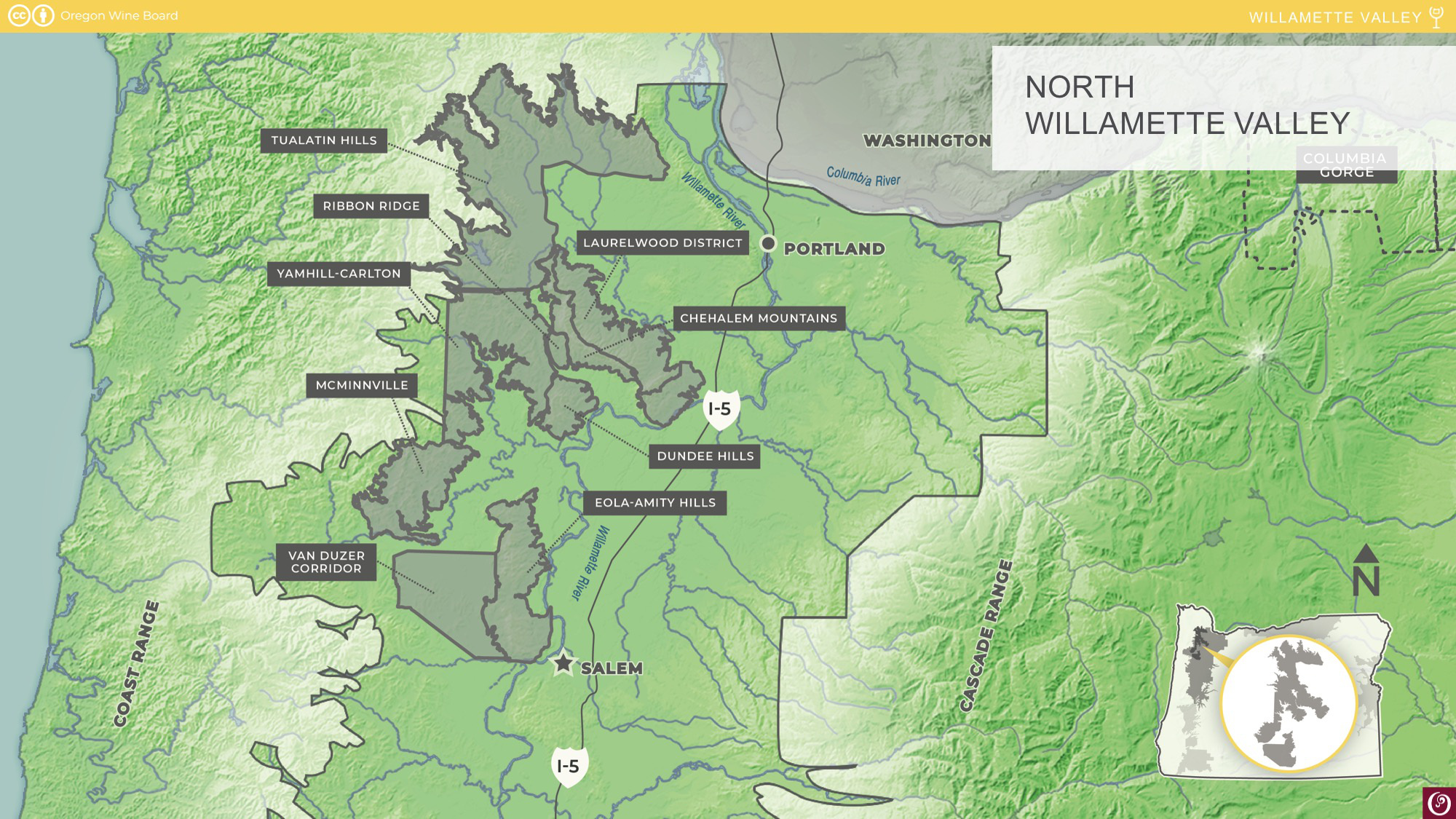
Image credit: Oregon Wine Board
Willamette Valley
The Willamette Valley, in western Oregon, contains two-thirds of the state's wineries and vineyards and has more than 700 wineries. At 150 miles long and 60 miles wide at its broadest point, it is a large and varied region, accounting for 69% of the state's vineyards.
While eastern Oregon has a dry, desert-like climate, the state generally experiences warm summers with cool evenings, long sunny autumns and mild winters. Vineyard soils mainly contain quick-draining marine sediments, volcanic material and windblown loess. Pinot Noir dominates, but Chardonnay, Riesling and Gamay Noir are increasingly successful, while Pinot Gris grows well in Missoula flood soils (The Missoula floods occurred between 15,000 and 13,000 years ago when a 3,000 square mile ice dam in Lake Missoula, northern Idaho, burst and repeatedly released flood waters across eastern Washington and down the Columbia River into western Oregon), containing sand, silt and clay.
The Willamette Valley encompasses 11 AVAs, including Yamhill-Carlton and Dundee Hills.
Yamhill-Carlton
Established in 2004, Yamhill Carlton AVA has nearly 1000 hectares of vines, grown in quick-draining, predominantly ancient marine sedimentary soils. The region lies 35 miles southwest of Portland and 40 miles east of the Pacific Ocean with mountains to the west and north and the Dundee Hills to the east. These protective barriers result in warm temperatures and the earliest harvest dates in the Willamette Valley.
Dundee Hills
Also founded in 2004, the Dundee Hills AVA has 900 hectares of vineyards on predominantly weathered, volcanic basalt soils, referred to locally as Jory. These are particularly deep, well-draining and rich in nutrients with a characteristic dark red hue from its high iron and clay content. Due to its easterly aspect and location between the Oregon Coast Range and Chehalem Mountains, the region is slightly warmer than other Willamette Valley AVAs.
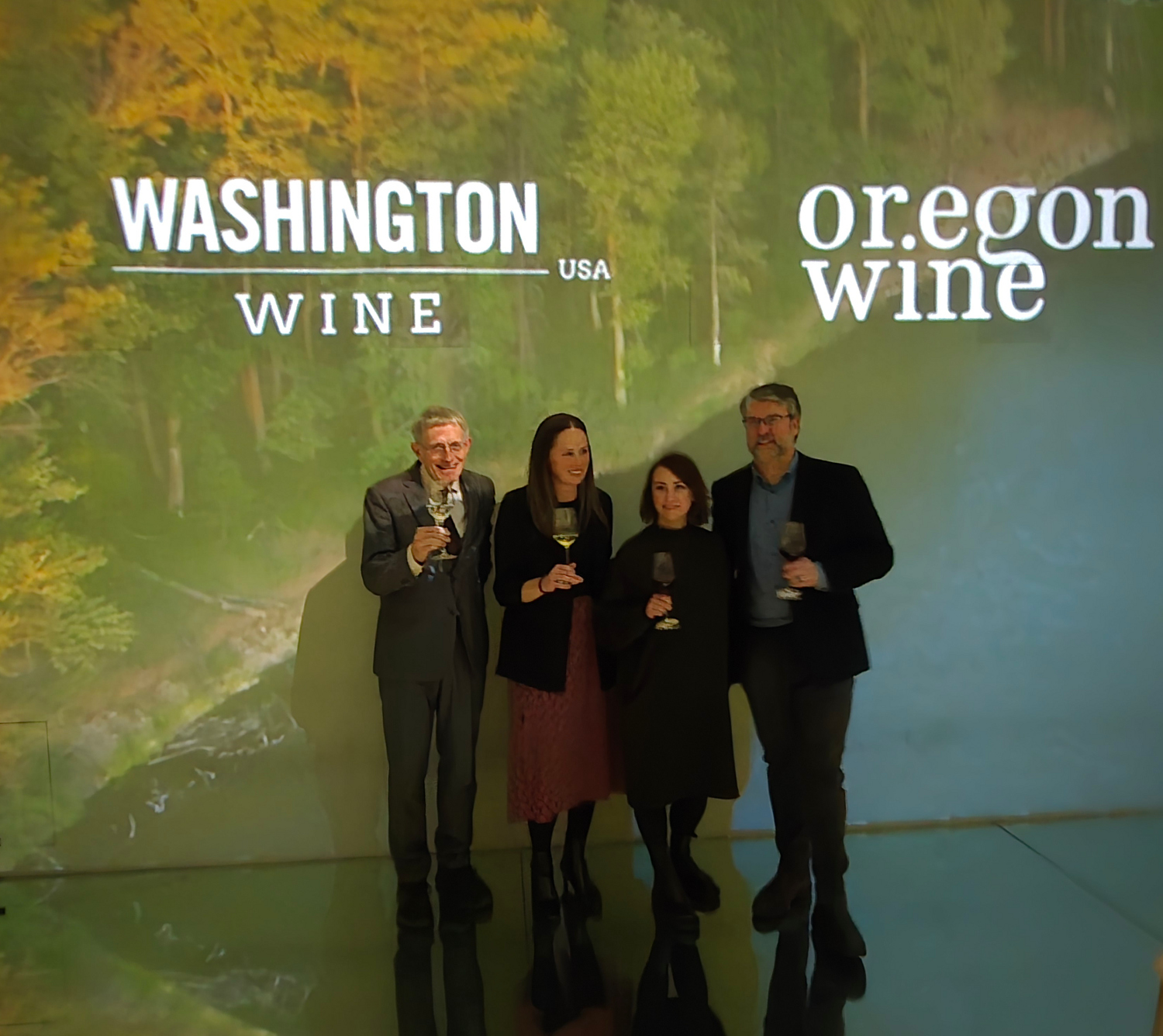
Simon Calder and other speakers at the Pacific Northwest 2025 event
Destination Pacific Northwest
A few weeks ago, a new event focusing on Washington and Oregon took place in central London. Destination Pacific Northwest saw travel expert Simon Calder leading a panel discussion showcasing the area's strong credentials as a must-visit destination for UK tourists, foodies and wine lovers.
Sponsored by Pacific Northwest Seafood, Oregon Wine Board, Washington State Wine Commission and Port of Seattle, the debate, wines and canapés tickled many tastebuds and kindled plenty of interest among those present.
Three wines stood out for me and if you're looking for something special - and different - to grace your table, then you won't be disappointed! The first is …pursued by bear Cabernet Sauvignon 2021, the second is Gran Moraine Yamhill-Carlton Chardonnay 2022 and the third is Sokol Blosser Bluebird Brut 2022.
…pursued by bear
Actor Kyle MacLachlan is best known for his role in David Lynch's Twin Peaks, but he also owns a winery in Washington State. Pursued by Bear is named after Shakespeare's stage directions in A Winter's Tale - "Exit, pursued by a bear" - a nod to MacLachlan's acting career and sense of humour.
A few years before Twin Peaks when visiting his father in Yakima, MacLachlan began exploring the burgeoning wine scene in the region. This eventually led him to consider making his own wine there and a chance meeting with Eric Dunham, owner of Dunham Cellars in Walla Walla, ended in the launch of Pursued by Bear in 2005. Three years later, Daniel Wampfler, who'd previously worked at Dunham Cellars and Ste Michelle Wine Estates, joined as winemaker. They make their wines from vineyards across the Columbia Valley.
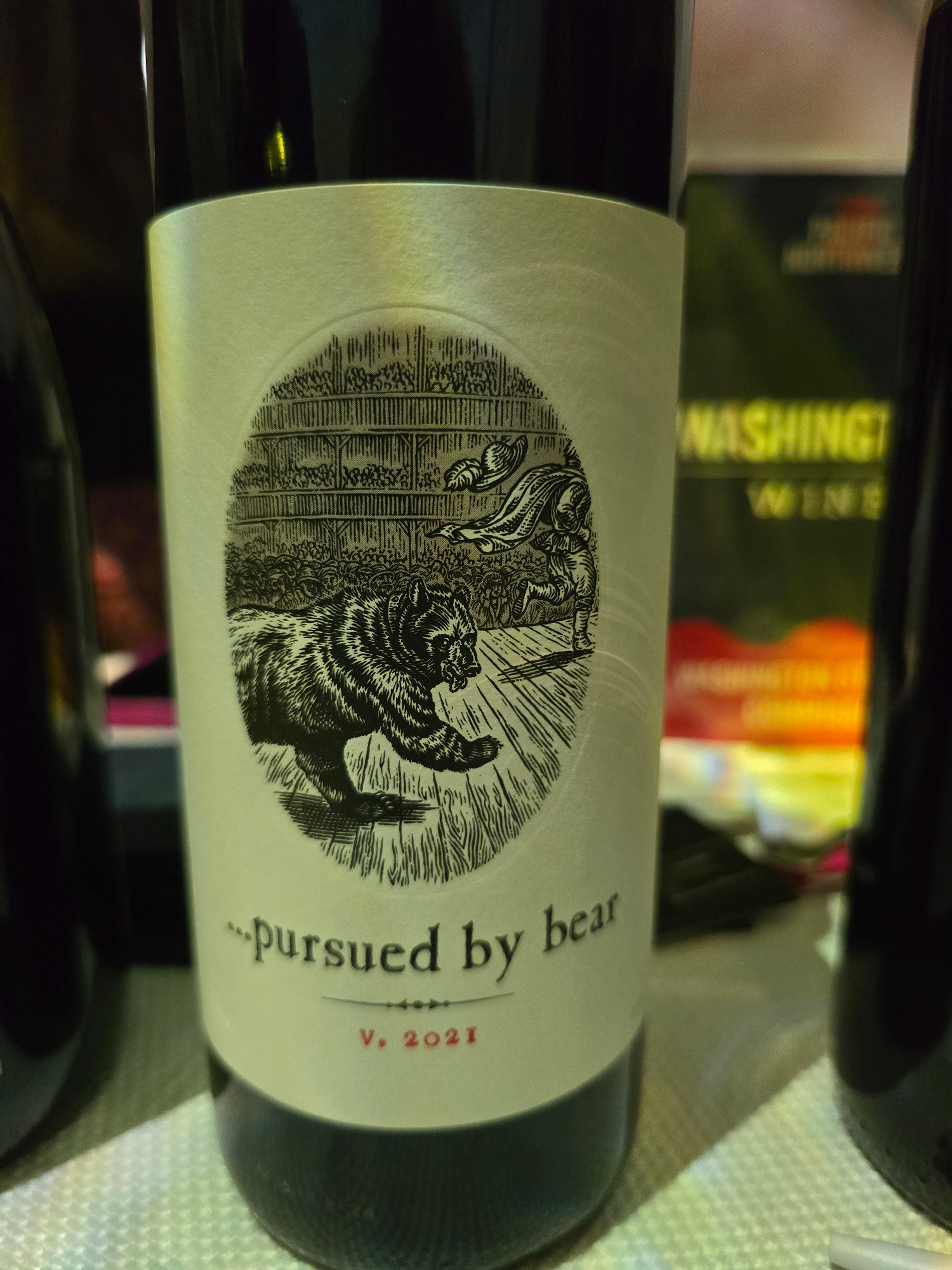
…pursued by bear Cabernet Sauvignon 2021
Grapes are sourced from five different vineyards across three AVAs and the wine spends 30 months in 100% Taransaud French oak, 79% new and 21% old.
🍇 Grapes: Cabernet Sauvignon 95%, Merlot 5%.
🎚️ ABV: 14.5%.
🔍 Appearance: Dark red colour.
👃 Nose: Notes of red plum, cherry, liquorice and a touch of tobacco leaf.
😋 Palate: Juicy fruit notes of ripe plum, black cherry and blackberry with cassis, cocoa powder, earthy and herbal notes of dried sage plus gently building spice and cedarwood. Tannins are slightly chewy, but also soft and well-balanced with the acidity, while the finish is long and elegant.
🍽️ Food Pairings: This wine would accompany rich, savoury red meat dishes, including beef, lamb and venison, served with roasted parsnips, or aged, nutty cheeses.
… but if you prefer a white wine, then the perfect choice, also showcased at the Destination Pacific Northwest event, is Gran Moraine Yamhill-Carlton Chardonnay 2022.
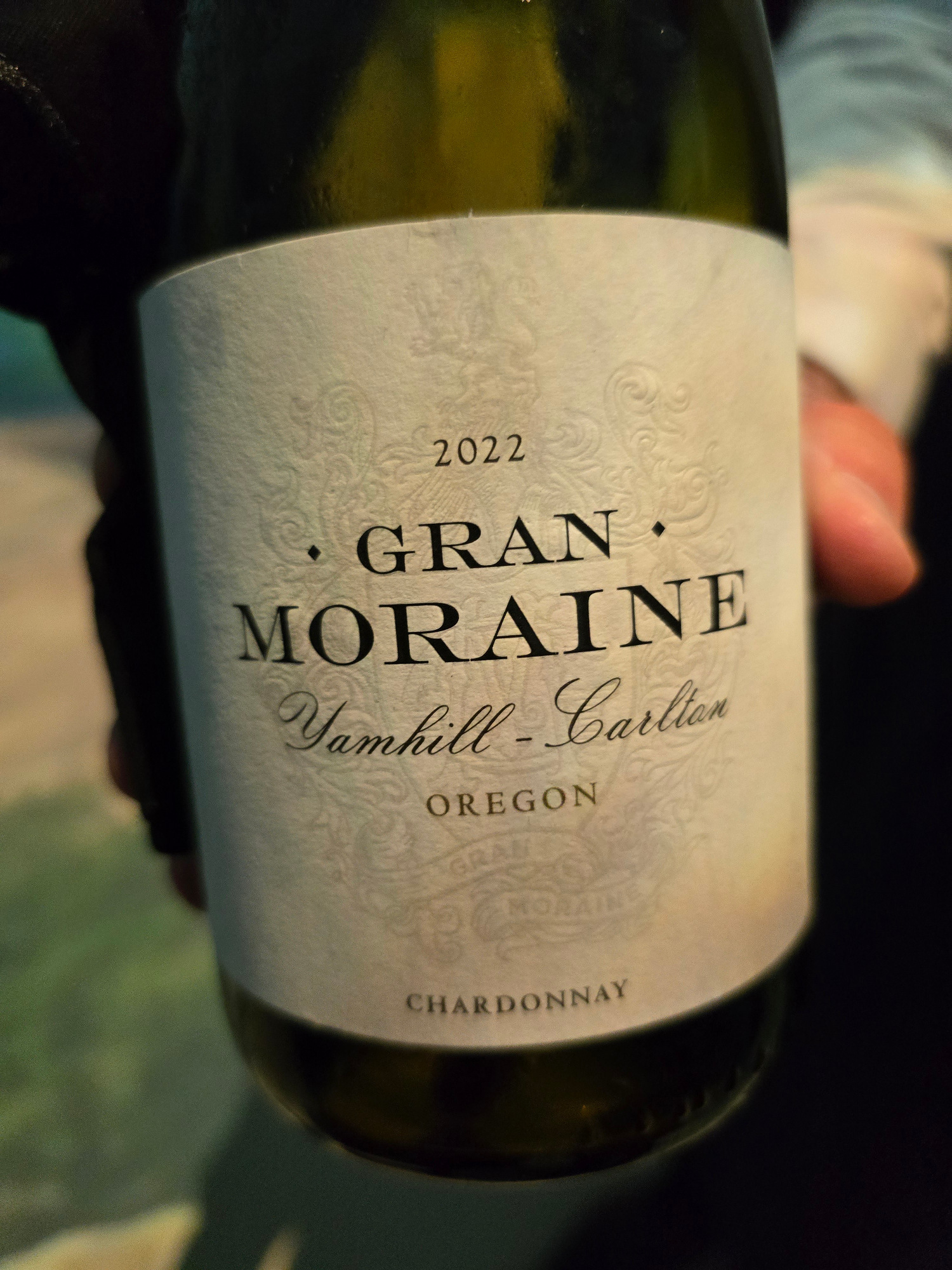
Gran Moraine
Gran Moraine is a 77-hectare estate founded by Barbara Bank of Jackson Family Estates in 2012. Located in the western part of Oregon's Yamhill-Carlton AVA, the winery's name refers to the glacial sediments (moraines) deposited by the Missoula Floods. Cooling afternoon breezes from the Pacific Ocean maintain good levels of acidity in the grapes, while warm temperatures allow optimum ripeness. Winemaker Shane Moore, hails from Idaho, but experience across the globe has honed his skills to creating world-class wines from this renowned Pacific Northwest estate.
Gran Moraine Yamhill-Carlton Chardonnay 2022
The Gran Moraine vineyard, in the western part of the Yamhill-Carlton AVA, was planted in 2005 with several Dijon clones of Pinot Noir and Chardonnay. Vines benefit from cooling breezes coming off the Pacific Ocean. This wine was aged for 16 months in French oak barrels (15% new) and an additional 4 months in stainless steel.
🍇 Grapes: Chardonnay 100%.
🎚️ ABV: 12.5%.
🔍 Appearance: Bright straw yellow.
👃 Nose: Notes of apple skin, lemon curd and peach with a hint of dried herbs.
😋 Palate: Notes of apple, stone fruit, lemon and lime with bracing acidity and wet stone minerality plus touches of charred toast, sour cream and savoury herbs. The finish is long and the oak is balanced without dominating.
🍽️ Food Pairings: This wine should pair well with buttery fish and seafood dishes, roast chicken and creamy vegetarian pasta or risottos.
… and if a bottle of bubbly is your choice, then I'll stay in Oregon's Willamette Valley for my third wine recommendation.
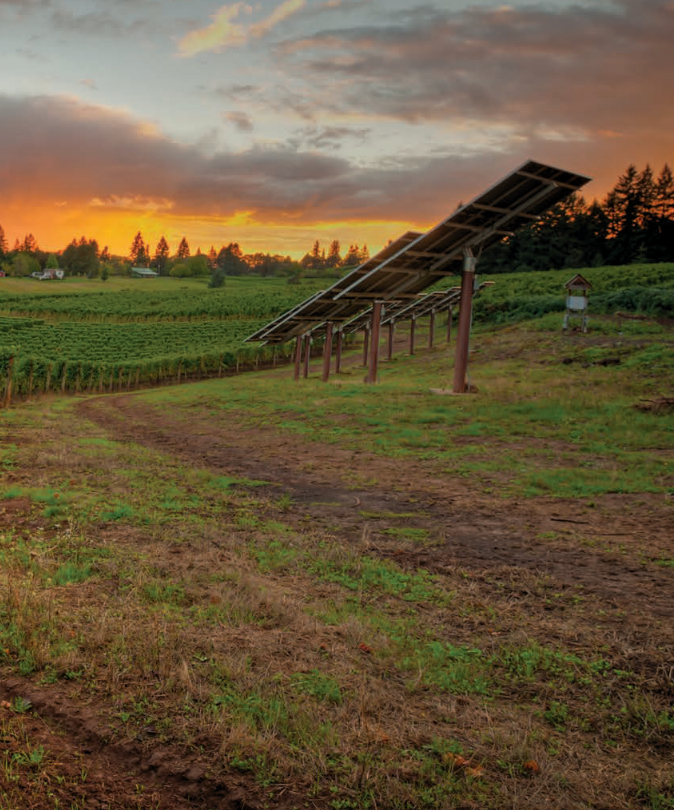
Sustainably farmed vineyard at Sokol Blosser: image from the winery
Sokol Blosser
Sokol Blosser began in 1971 when Susan Sokol Blosser and Bill Blosser planted vines in the Dundee Hills. Today, overseen by Alex Sokol Blosser, second generation president & winegrower, the certified organic estate covers 36 hectares in the Dundee Hills, as well as sourcing grapes from other regions. Committed to sustainable practices right from the start, the winery is also certified B-Corp. Additionally, for over 20 years, they have supported a project preserving breeding habitats for the Western bluebird, with 15 bird houses on their property.
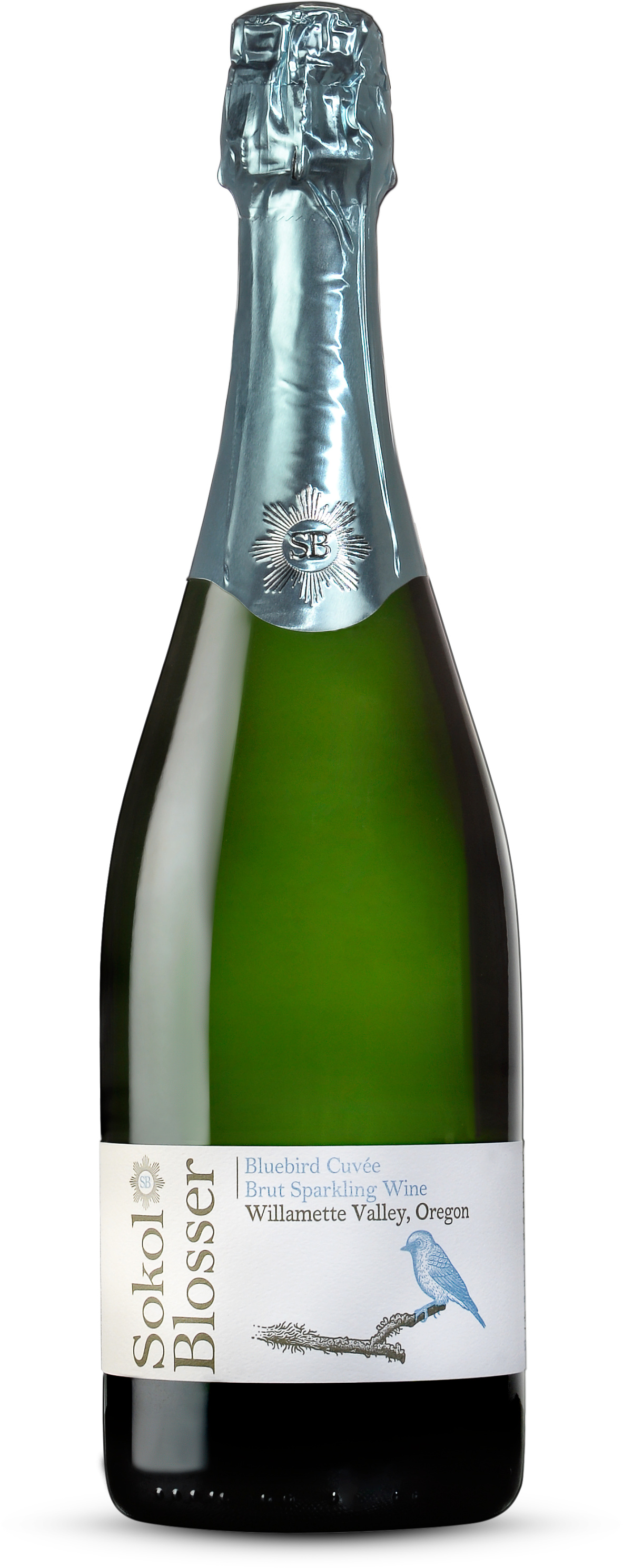
Sokol Blosser Bluebird Brut: image from the winery
Sokol Blosser Bluebird Brut 2022
This is a traditional method sparkling wine that spends 12 months on its lees. The label shows an image of a Western bluebird.
🍇 Grapes: Pinot Noir 39%, Müller-Thurgau 21%, Chardonnay 20%, Riesling 16%, Muscat 4%.
🍬 Residual Sugar: 5g/L.
🎚️ ABV: 12%.
🔍 Appearance: Pale straw in colour with fine bubbles.
👃 Nose: Aromatic and floral with notes of apple and citrus plus slight hints of honey and almond.
😋 Palate: Light and refreshing with notes of crisp green apple, citrus and stone fruit plus a crisp, dry finish.
🍽️ Food Pairings: Perfect as an aperitif, this palate-cleansing sparkling wine can also go well with seafood, smoked salmon and light starters.
The Pacific Northwest is a beautiful, diverse region with an enviable and justifiable reputation for making world-class wines. Add to that the culinary culture and tourist options, then this is an area that should definitely be on all our travel lists. Bon voyage!