Famiglia Casadei: quality wine for the modern world!
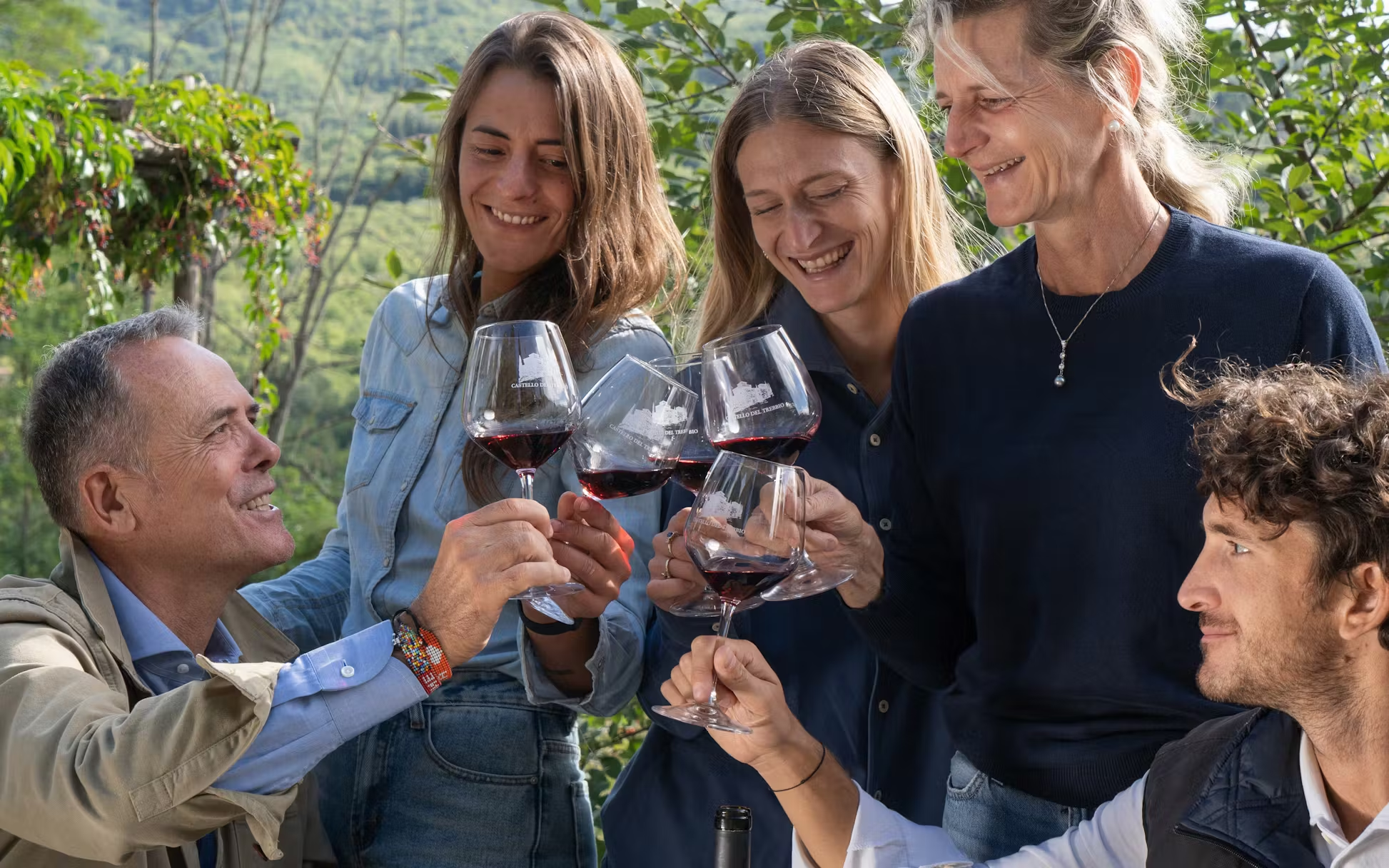
The Casadei family
Famiglia Casadei is a family-led group of four estates located across Tuscany and Sardinia, united by a shared vision of terroir-driven winemaking and sustainability. From Chianti Rufina to Alta Maremma, Casentino and Sardinia, each estate reflects its own landscape, microclimate, grapes and wine styles.

BioIntegrale®
Winemaker, owner and technical director, Stefano Casadei, was born and raised in Tuscany, studying agriculture in Italy and then later at the University of Bordeaux.
At the heart of his winemaking philosophy is Biointegrale®, a ten-point manifesto he created in 2013. The methodology integrates organic and biodynamic farming, energy sustainability, architectural conservation, social responsibility and scientific research. All the Famiglia Casadei estates adopt this approach and are both Demeter and Biodiversity Friend-certified. Therefore, fermentations are spontaneous, supported by a double harvest, where the first picking is used to create a pied de cuve (Pied de cuve is a natural wine-making technique where a small batch of grapes is harvested early and fermented to create a native yeast starter, without relying on commercial yeasts), which naturally initiates fermentation.
Sustainability
As a result of this approach and with the impact of climate change, all four estates maintain high standards of environmental care, respecting biodiversity and reducing carbon emissions. Additionally, they only employ local people and use cork, bottle and other materials suppliers from within a 30km radius. Each estate is self-sufficient for their energy requirements, with photovoltaic panels integrated into the buildings without negatively impacting on the beauty of the landscape.

Map of Sardinia showing the location of Famiglia Casadei's Olianas estate
The estates
The four estates are Castello del Trebbio, Tenuta Casadei, Tenuta Olianas and Terre di Romena:-
Castello del Trebbio
Castello del Trebbio
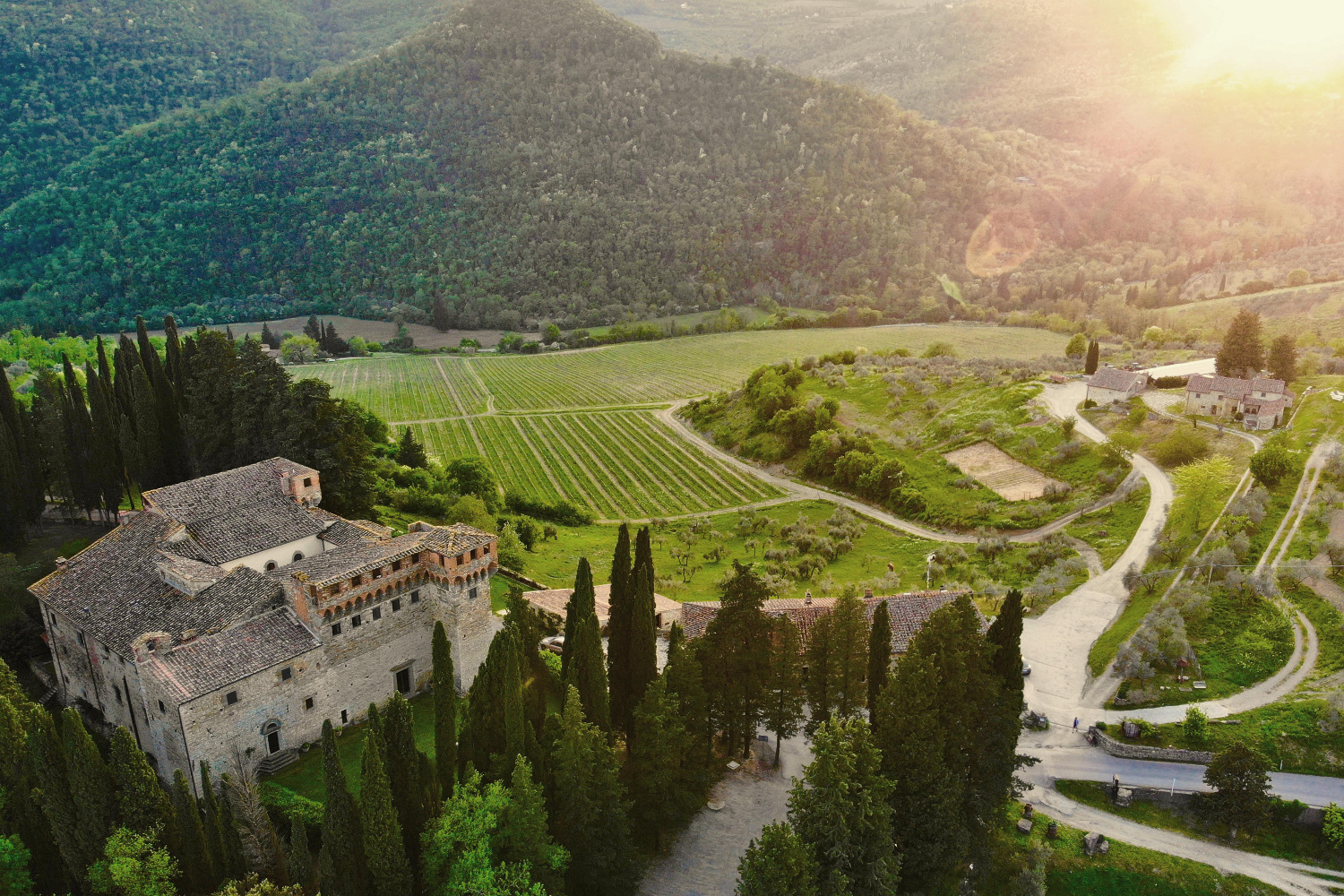
Famiglia Casadei is based at Castello del Trebbio in Chianti Rufina, a historic 12th century castle, purchased in 1968 by the parents of Anna Baj Macario, Stefano Casadei's wife. The 350-hectare estate in the highest part of Chianti is surrounded by hills and woods.
Having inherited the estate from Anna's parents, the couple set about regenerating the grounds in the early 1990s. This included mapping the soils, microclimates, altitudes and exposures of the vineyards with scientific rigour. On completion of the project, they planted Sangiovese where terroir conditions were ideal and, in cooler or lower parcels, red and white international grape varieties. The other three estates then followed.
Soils at Castello del Trebbio are predominantly calcareous-clay, with a clay content ranging between 40% and 43%. According to the winery, this composition provides the wines with "structure, depth and a strong sense of territorial identity."

Tenuta Casadei
Tenuta Casadei
Tenuta Casadei is located in Suvereto in the Alta Maremma region of Tuscany, only 13km from the Mediterranean Sea. Cooling sea breezes and the surrounding hills help mitigate extremes of temperature, enabling grapes to ripen well while maintaining freshness. Mineral-rich clay and silt soils in Suvereto and sandy, pebble-rich alluvial soils in vineyards further south allow a variety of red and white grape varieties to be grown. Tenuta Casadei is co-owned with Californian winemaker, Fred Cline, and the wines are made using amphorae, cement tanks and oak.

Tenuta Olianas
Tenuta Olianas
Tenuta Olianas is located just south of the centre of Sardinia, protected by mountains, on clay, limestone, volcanic and sandy soils. Vineyards lie at 400-550m above sea level with constant breezes moderating temperatures. Using regenerative and biodynamic farming, Tenuta Olianas makes wines from indigenous grapes and is the only Demeter-certified estate in Sardinia.
Terre di Romena
Terre di Romena
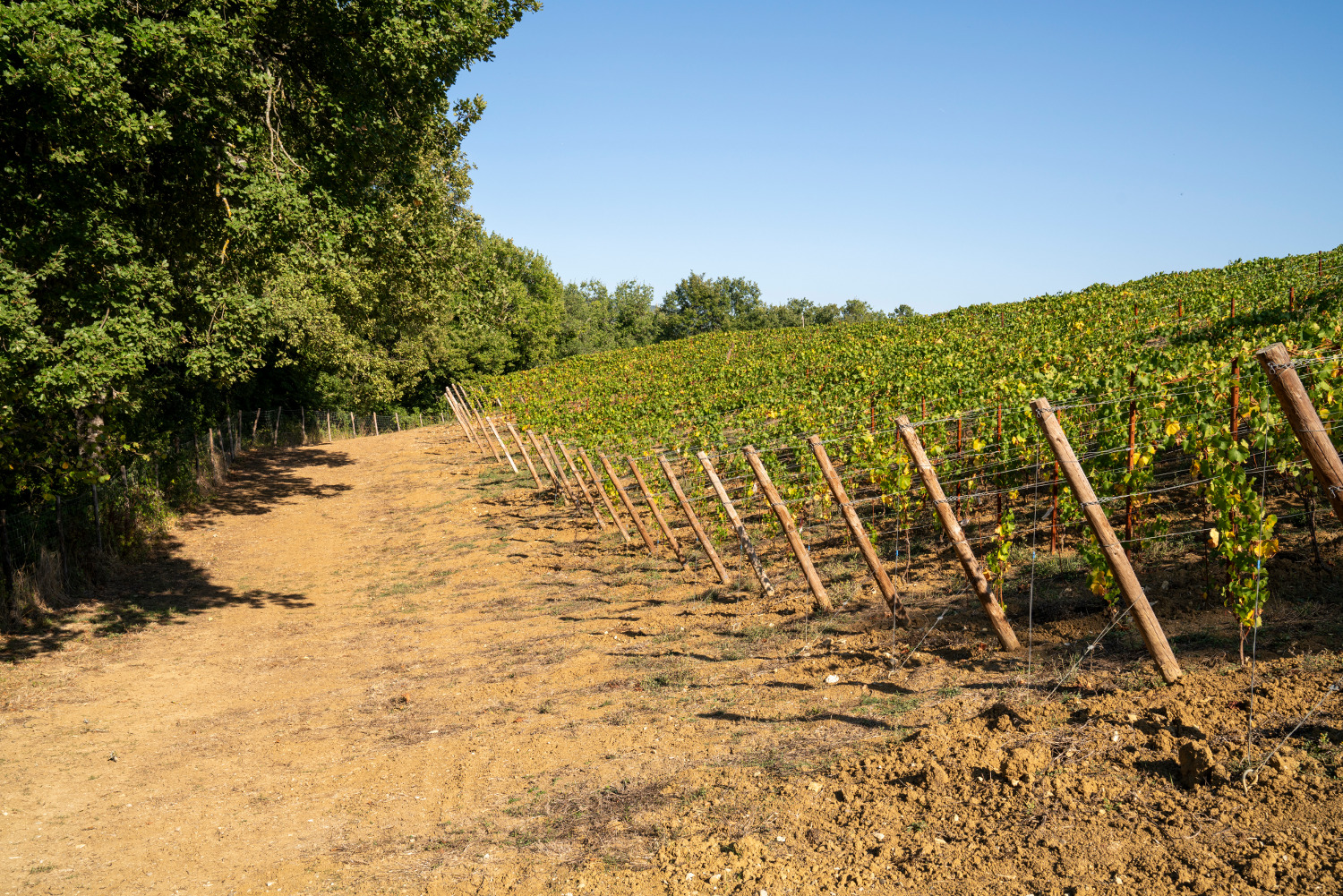
Terre di Romena, in the Casentino valley of Tuscany's Arezzo province, is the most recent and highest estate acquired by the Casadei family and is surrounded by dense woods that enhance biodiversity. Vineyards, at 450-650m above sea level, benefit from clay-rich and limestone soils, while the cooler climate sees a diurnal range in excess of 10°C. Local legend claims that Napoleon left the first Pinot Noir vine in this area!
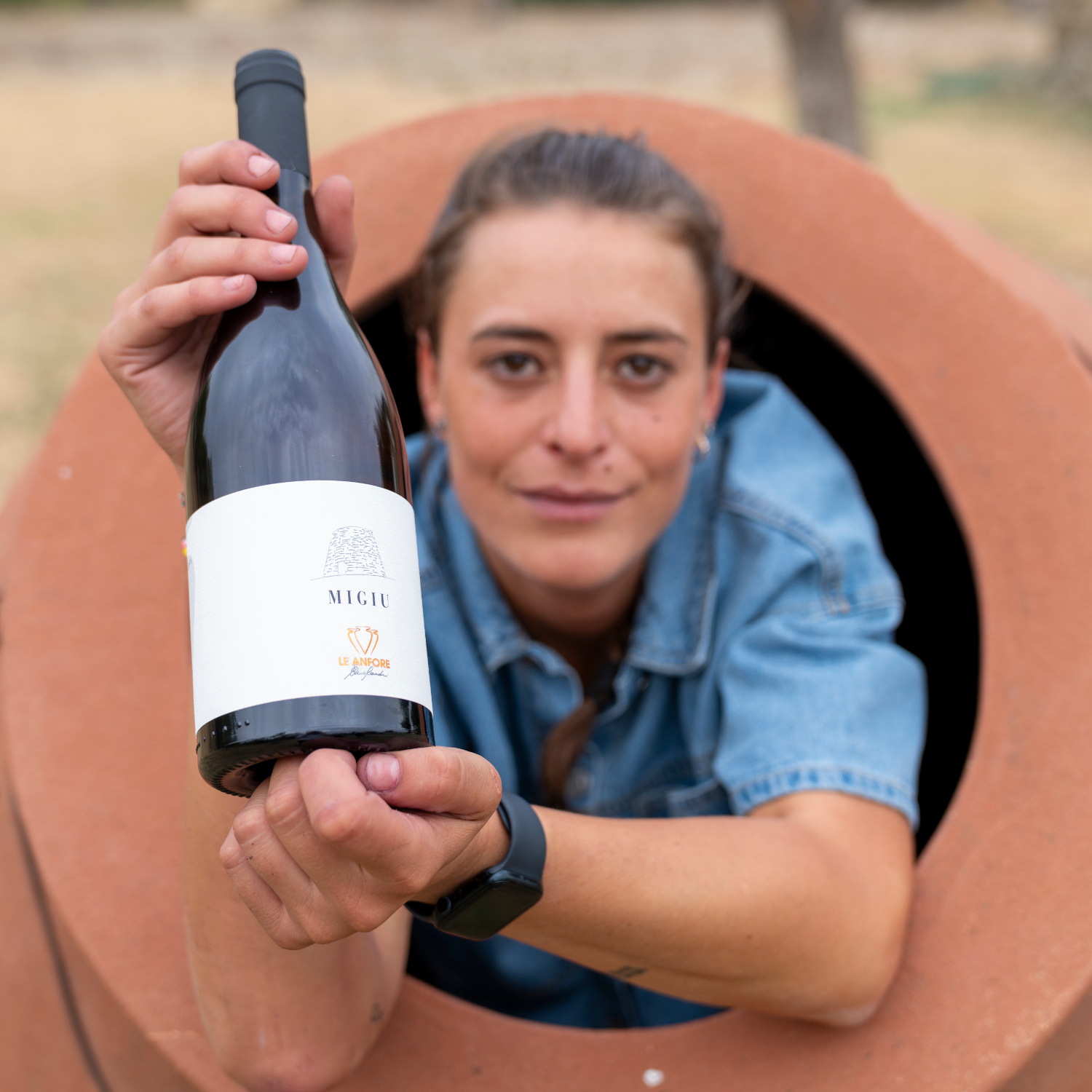
Elena Casadei with her amphora project
Amphora
"Behind every bottle of wine is a story and a philosophy", says Elena Casadei, 2nd generation family winemaker.
Today, Anna and Stefano's children - Lorenzo, Laura and Elena - are also actively involved in the wine business. Elena's amphora project across all four estates is a striking example.
Her focus is on a minimal intervention approach to express terroir-driven purity of fruit and texture, without the influence of oak. Her general approach for red grape varieties is to ferment primarily in 800L terracotta Georgian qvevri, buried underground without lids. Ageing then takes place in 500L or 800L Tuscan terracotta Impruneta amphorae with airtight steel closures for ageing. However, these choices are assessed and determined on a year-by-year basis, according to the characteristics of both the vintage and the individual wine. "The different materials and origins of the terracotta", explains Elena, "provide varying levels of oxygen permeability, allowing the development of distinct evolutionary profiles which are subsequently assessed through tasting." For example, the higher porosity in the qvevri allows for effective micro-oxidation and prevents reductive notes developing, particularly in the Cannonau.
Using different amphorae
She works with up to 35 amphorae for different fermentation methods in order to achieve the right balance between fruit, tannin and texture. Then she chooses the ones she'll use for blending. The remainder go to her father. "When you decide to make amphora wine", explains Elena, "you have to understand that an amphora is a very beautiful instrument, but you have to decide if the variety is fine with it. Each amphora is different, because they are handcrafted instruments, so it depends on how they are fired and the season in which they're made. Humidity can also change while the amphorae are being created. For me, a wine must be clean even if you are a natural estate and must say something about the terroir."
Wine tourism
Wine tourism is an important part of the company's vision. Currently, Castello del Trebbio Hospitality and Tenuta Olianas Hospitality offer a range of tours and tastings, including food, wine or olive oil, lunch/dinner options and, at Castello del Trebbio, holiday accommodation too.
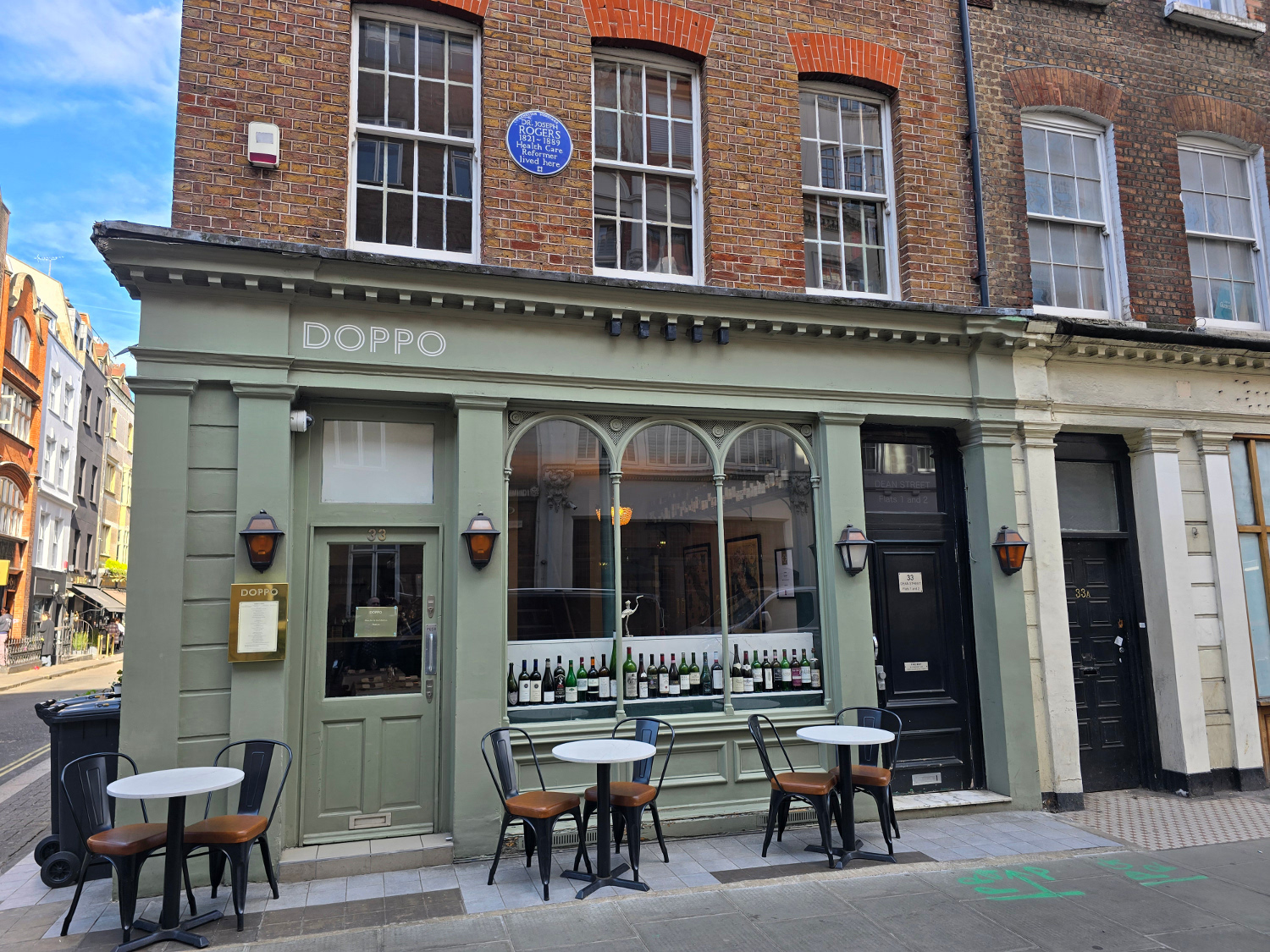
DOPPO Soho
Wine and food pairings
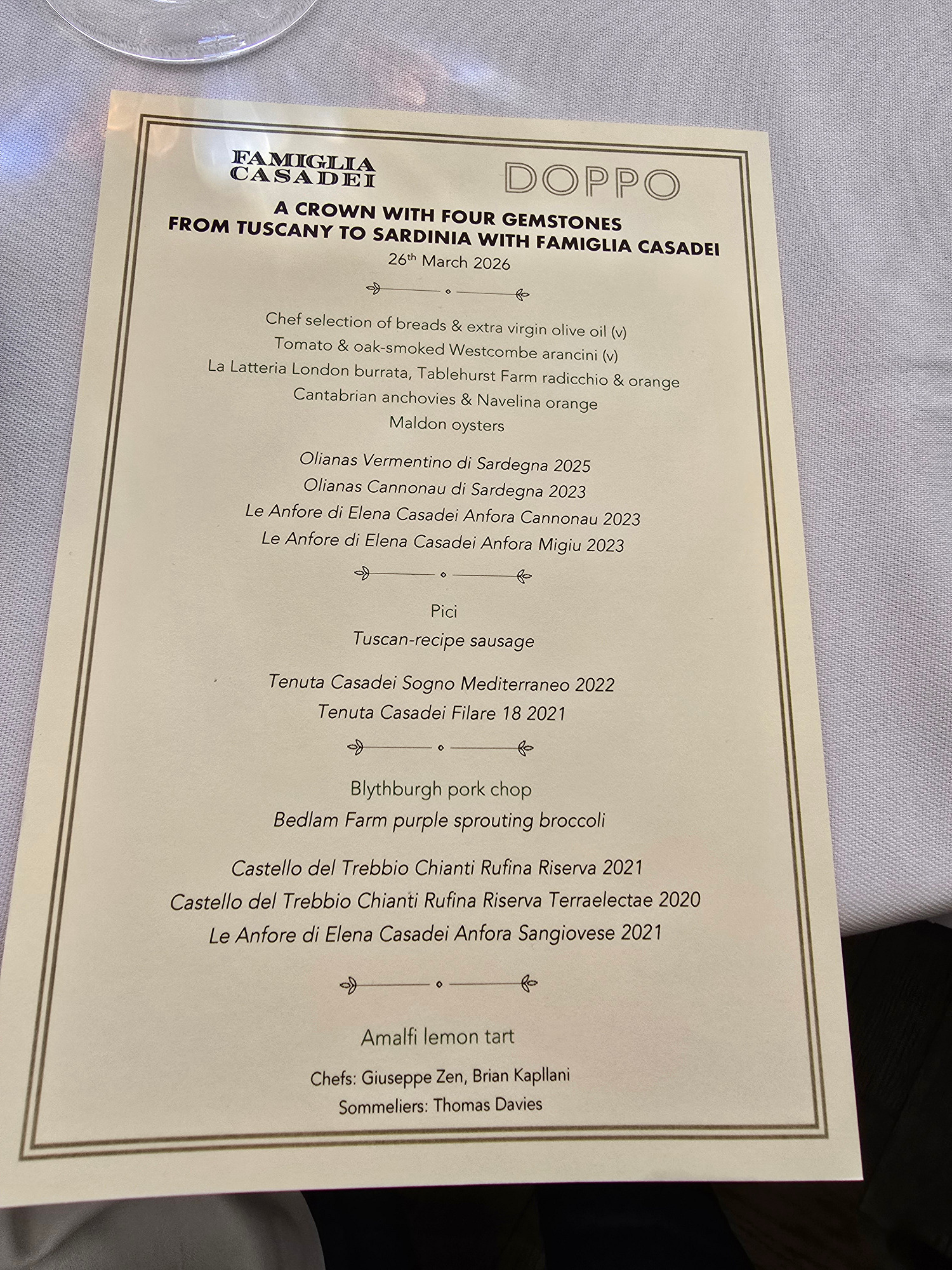
At a recent lunch and tasting of Famiglia Casadei wines at London's DOPPO Soho, Elena presented a selection from their estates, including some of her amphora wines, specially paired with a range of dishes.
Olianas Vermentino di Sardegna DOC 2024
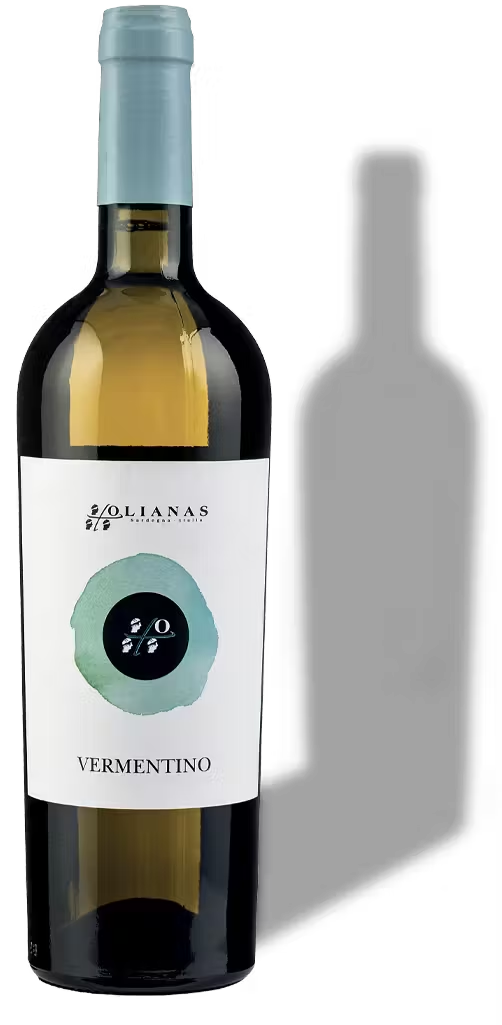
Grapes come from two vineyards with different concentrations of clay, loam, marl and sand. Twenty percent of the grapes are harvested earlier to preserve freshness and acidity. From this, they produce the pied de cuve and the entire mass ferments on its skins. Then 20% of the wine is aged in second passage tonneaux for approximately five months, "adding complexity without overshadowing the varietal character", says Elena.
🎚️ ABV: 13%.
🍇 Grapes: 100% Vermentino.
🔍 Colour: Straw yellow.
👃 Nose: Gentle notes of lemon, grapefruit, white peach and hints of white flowers and breadcrust are evident here. However, the wine is not as aromatic as a Vermentino di Gallura from the north of the island, which Elena attributes to the natural fermentation.
😋 Palate: Fresh, clean and bright, this medium-to-full bodied expression shows crisp acidity plus notes of citrus, fresh and dried herbs, blanched almonds and a touch of minerality with a slightly saline/savoury character.
🍴 Food Pairings: Great with a range of light starters or aperitifs, this wine paired particularly well with the anchovies and orange served at the tasting.
Olianas Cannonau di Sardegna DOC 2023

Grapes are sourced from different plots encompassing a mix of soil types, similar to the Vermentino described above. After destemming and light crushing, a small part of the must is transferred to 1000L amphorae for fermentation with 20-25 days of skin contact. Then 20% of the wine is aged in second, third and fourth passage barriques for eight months, with the remainder in stainless steel vats.
🎚️ ABV: 14%.
🍇 Grapes: 90% Cannonau and 10% Tintillu (Tintillu is the local name for Alicante Bouschet, authorised since the 1950s by the Province of Cagliari regulations for blending with Cannonau and used for adding depth of colour).
🔍 Colour: Dark ruby red.
👃 Nose: Aromas of dark berries, blackcurrants and plums with touches of spice and cacao.
😋 Palate: Unlike the traditional Sardinian style of Cannonau, which Elena describes as tough and very alcoholic, this has a fresh, fruity profile with bright acidity. There are notes of bramble fruit and blueberries with hints of spice and earthy herbs, a softening touch of dark chocolate and well-balanced tannins.
🍴 Food Pairings: Versatile with many dishes, including the 'Tomato & oak-smoked Westcombe arancini' served at the tasting, as well as grilled or roast meat.
Olianas 'Le Anfore di Elena Casadei' Cannonau di Sardegna DOC 2023

Grapes come from two plots with specific soils and are fermented separately before blending after malolactic conversion. Elena explains further: "There's volcanic for full body and very crunchy fruitiness in the mouth. The other part is 100% limestone in order to have elegance and freshness."
Fermentation takes place in qvevri with 30-40 days maceration on the skins. The wine then matures for six months in Impruneta, where batônnage happens naturally due to the oval shape, and a further four months in bottle.
🎚️ ABV: 14%.
🍇 Grapes: Cannonau 100%.
🔍 Colour: Deep ruby red.
👃 Nose: Aromatic with notes of loganberries, red cherries, Mediterranean herbs and a hint of spice.
😋 Palate: Fresh and fruity, showing mixed berry notes, pepper spice and a long, elegantly mineral finish with well-balanced tannins plus touches of liquorice and savoury herbs.
🍴 Food Pairings: Another wine that could pair well with a variety of foods, including meat or vegetarian lasagne, rabbit, mushroom and parsnip-based dishes.
Migiu 'Le Anfore di Elena Casadei' Isola dei Nuraghi IGT 2022

Semidano grapes come from Tenuta Olianas' loam and sandy soils of marine origin grown in the main IGT area of Sardinia. Semidano is an ancient variety of Sardinia, with good levels of polyphenols, that used to be made into table wine and is now seeing a resurgence. For Elena, making a wine from this grape expresses "the real Sardinia" with its notes of Mediterranean scrubland - juniper, rosemary, myrtle etc.
Fermentation takes place in qvevri with 120-150 days' maceration time on skins, depending on the vintage. This is followed by five to six months of ageing in Impruneta on lees (without skins) and another four months in bottle.
The blending of fermentation methods creates an orange wine with body and structure plus plenty of varietal aromas and flavours, sometimes missing from the style due to oxidative winemaking.
🎚️ ABV: 13%.
🍇 Grapes: 100% Semidano.
🔍 Colour: Golden yellow with a tinge of amber.
👃 Nose: Aromatic with notes of apricots, peaches, citrus, dried flowers, juniper and jasmine.
😋 Palate: A very drinkable, modern style of orange wine with approachable tannins and bright acidity, this has a fresh, yet full-bodied mouthfeel, showing notes of grapefruit, Mediterranean herbs and a gentle savoury, sapid edge plus a long finish.
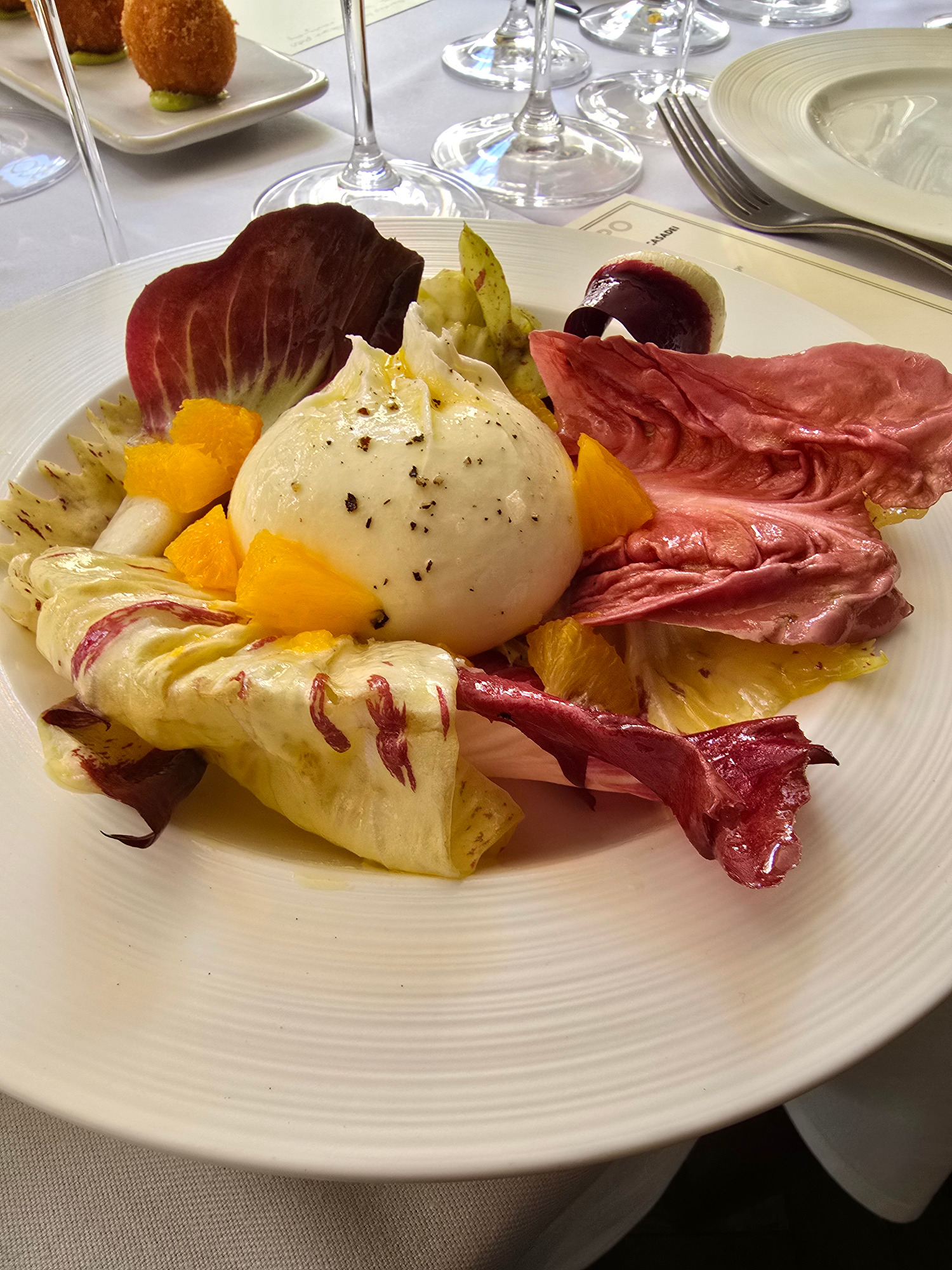
🍴 Food Pairings: Very versatile as a food match, this went particularly well with the creamy Burrata served at the tasting. It would also pair successfully with many fish or chicken dishes, herb-aged cheeses and onion soup.
Casadei Sogno Mediterraneo Toscana IGT 2022

This wine is Stefano Casadei's expression of a more unusual blend for the region. Rather than Cabernet Sauvignon and Merlot, he decided to marry the spicy Alta Maremma Syrah character with Mourvèdre and Grenache.
Grapes are fermented in cement tanks and partially in amphorae, with maceration on the skins lasting 18 days. After racking, malolactic conversion and ageing for 12 to 18 months take place in French oak barriques, 20% of which are new and 80% second passage.
🎚️ ABV: 14%.
🍇 Grapes: 85% Syrah and 15% Mourvèdre and Grenache.
🔍 Colour: Dark ruby red.
👃 Nose: Intensely aromatic and herbal with notes of blackberries, mint, dark chocolate and tobacco.
😋 Palate: A spicy, full bodied Syrah, showing bramble berry, cocoa, balsamic and slightly earthy notes with a hint of crunchy rhubarb and smooth tannins.
🍴 Food Pairings: This wine was a great pairing for the spaghetti and Tuscan sausage served at the tasting, the freshness and juiciness of the wine bringing out more of the herbs in the dish. It will also go well with meat stews and aged cheeses.
Casadei Filare Toscana IGT 2021
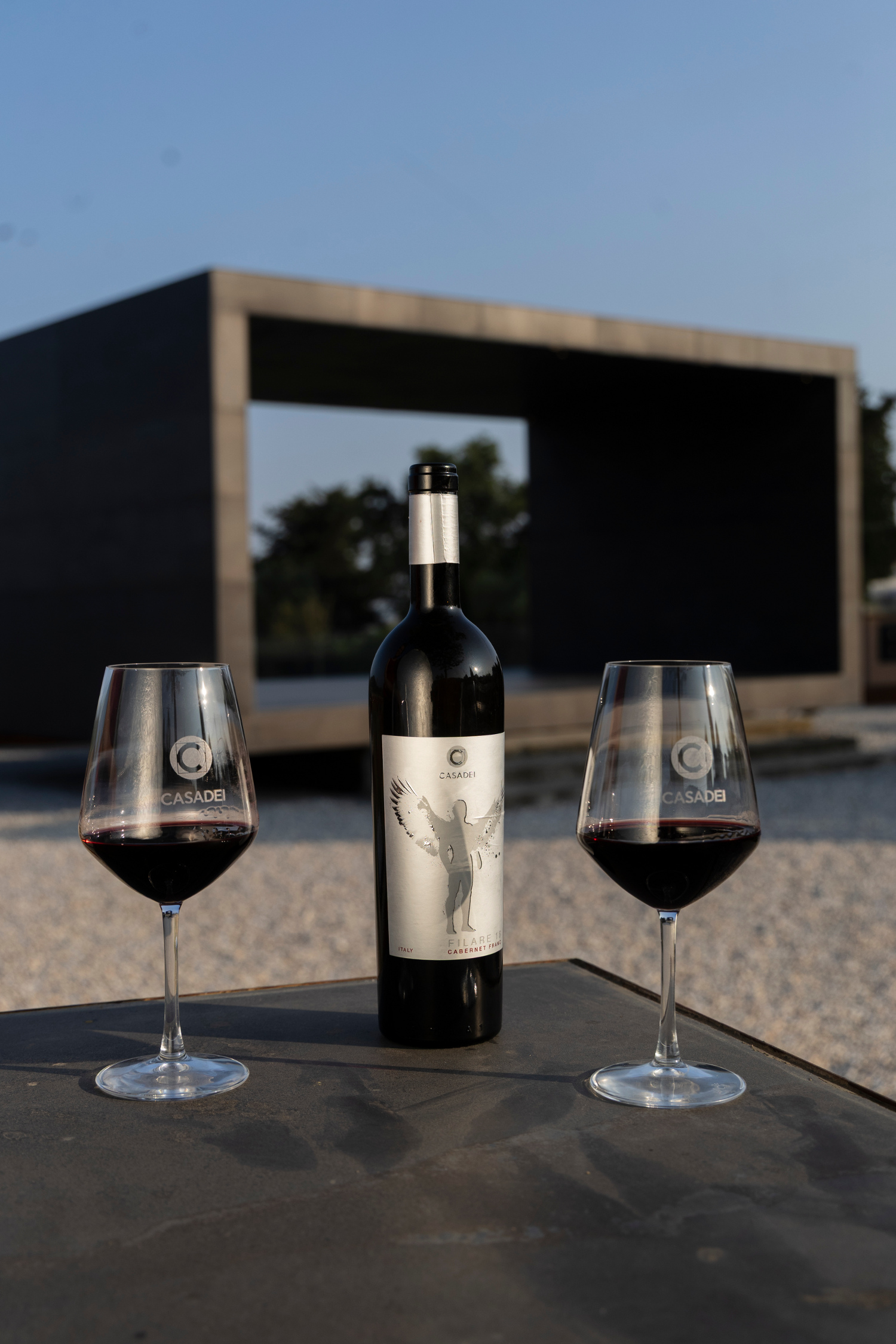
Stefano Casadei planted Cabernet Franc due to a love of Loire and Bordeaux expressions of the grape. "Good soil pH and elegant maturation of the pyrazines", as Elena describes, are key to achieving their goal of producing a well-balanced, fresh and fruity Cabernet Franc.
Vinification takes place entirely in terracotta vessels, including both qvevri and Impruneta amphorae. The final blend is then determined and the wine is transferred to French oak barriques for 18-20 months (50% new and 50% second-fill).
🎚️ ABV: 14%.
🍇 Grapes: 100% Cabernet Franc.
🔍 Colour: Deep ruby red.
👃 Nose: Aromas of red berries, mocha and spice with a savoury, herbal edge.
😋 Palate: Fresh and elegant with notes of ripe blackberries, raspberries and cherries, plus touches of cedarwood, tobacco, vanilla and herbs, complemented by silky smooth tannins. This is a very drinkable wine with a refreshing hint of minerality on the long finish.
🍴 Food Pairings: Another good match for the spaghetti and Tuscan sausage, bringing out more of the sweetness in the dish, it will also pair successfully with aged cheeses and grilled or roasted red meats.
Castello del Trebbio 'Le Anfore di Elena Casadei' Sangiovese Toscana IGT 2021
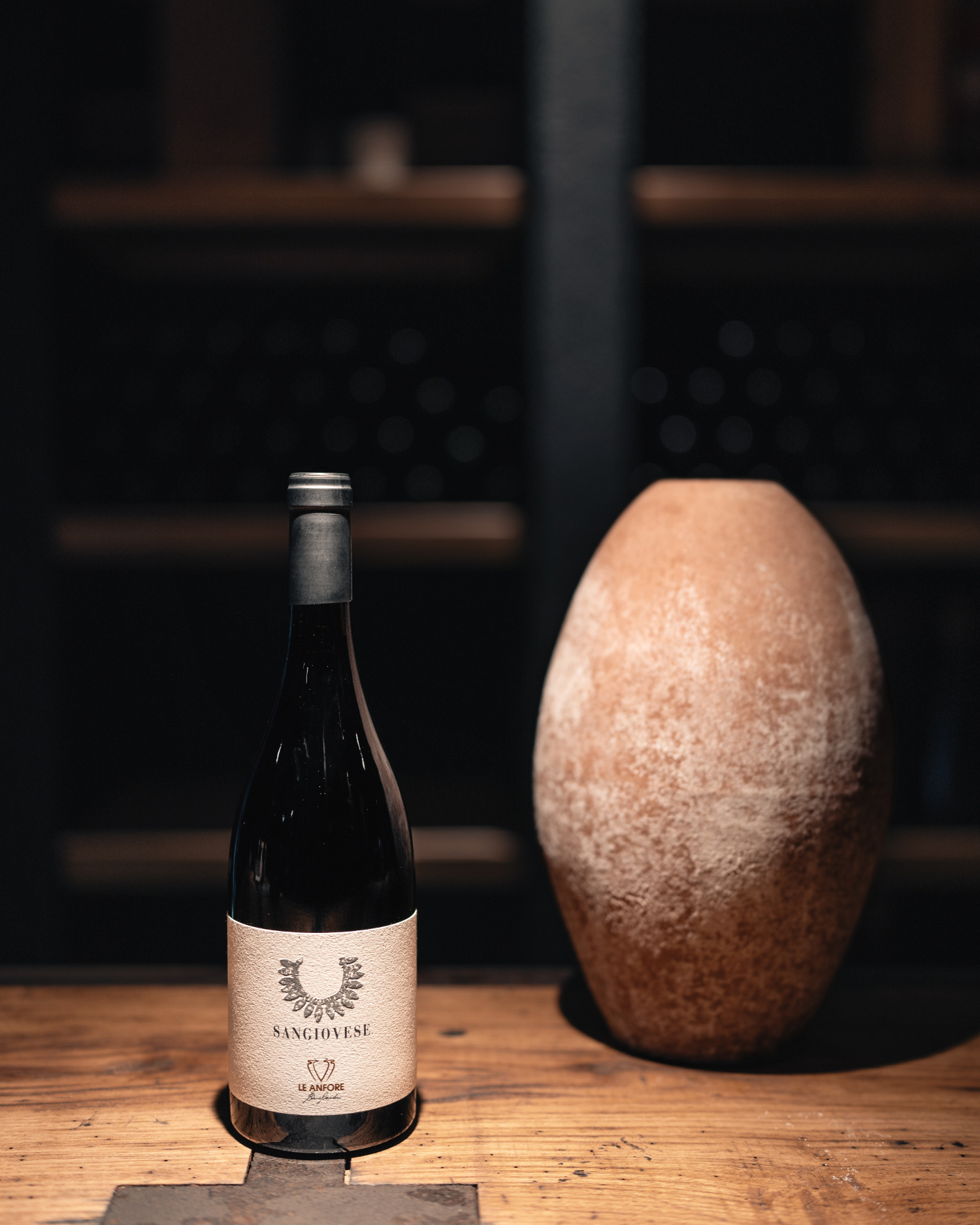
Elena Casadei chooses the best Sangiovese plot for this amphora wine. Her aim is to make a pure, elegant expression of the variety that showcases the terroir and vintage without oak influence. The well-drained soil and high altitude result in fresh, leaner Sangiovese styles.
Grapes ferment on their skins in qvevri for between 20 and 35 days, depending on the vintage, then mature in amphorae for six to eight months and at least 24 months in bottle.
🎚️ ABV: 13%.
🍇 Grapes: 100% Sangiovese.
🔍 Colour: Ruby red with a tinge of garnet.
👃 Nose: Elegantly fruity and floral, this shows notes of red fruit, star anis, herbs and juniper plus a hint of violets.
😋 Palate: From a cool and fresh vintage, this is an elegant and moreish wine that has great precision and never feels heavy. Notes of red berries, plums, herbs and spice with an earthy and balsamic edge are balanced by sweet, silky tannins, while the long finish has a fresh, mineral edge.
🍴 Food Pairings: A great pairing for the pork chop and purple sprouting broccoli served at the tasting, as well as for mushroom risottos, game and rare or medium-rare steaks.
Castello del Trebbio Chianti Rufina Riserva DOCG 2021
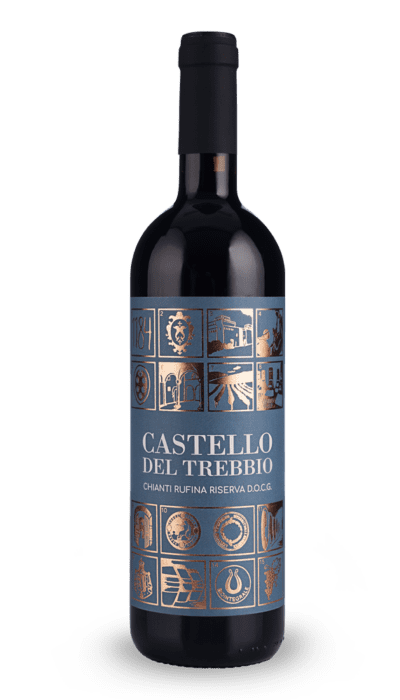
This wine is a more international, full-bodied style, with Merlot and Syrah balancing the more vertical and tannic Sangiovese.
Grapes from a mix of plots ferment on their skins in stainless steel tanks for 10-15 days. Then 85% ages in 20hl barrels and the remainder in second and third passage tonneaux for around 20 months, before a further six months minimum in bottle.
🎚️ ABV: 13.5%.
🍇 Grapes: 90% Sangiovese, 10% Merlot and Syrah.
🔍 Colour: Deep ruby red.
👃 Nose: Intensely aromatic with notes of cherries, plums, Mediterranean herbs, cedarwood and peppery spice.
😋 Palate: The fruity, herbal and spice notes continue on the palate, adding earthier hints of cranberries and green olives, leather and some tannic grip which does not feel harsh.
🍴 Food Pairings: Also good with the pork dish described above, it will pair well with grilled red meats and portobello mushrooms, game or beef stews.
Castello del Trebbio Vigneto Lastricato Terraelectae Chianti Rufina Riserva DOCG 2020
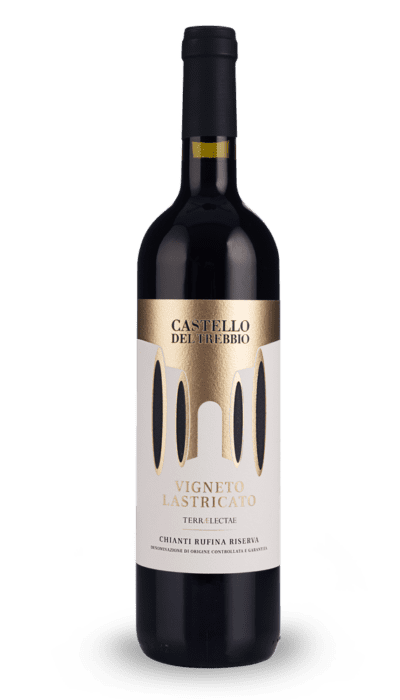
The Sangiovese for this wine comes from a dedicated vineyard called 'Lastricato'. Grapes ferment on their skins in qvevri for 15-25 days, depending on the vintage. Then the wine ages in 15-25hl oak barrels for approximately two years and a further twelve months in bottle. Different types of wood are used in order to achieve "balance and complexity without excessive influence from oak", says Elena.
🎚️ ABV: 14%.
🍇 Grapes: 100% Sangiovese.
🔍 Colour: Garnet red.
👃 Nose: Aromatic and intense with notes of blackberries, plums, sandalwood and a hint of frankincense.
😋 Palate: This is a particularly elegant and balanced wine. Pronounced herbal notes of thyme and a touch of wild mint blend seamlessly with the fruity tones of cherries, blackberries and prunes plus savoury, earthy hints of star anis and peppery spice. There's a mineral edge on the finish and a good balance of acidity and tannins. Still young, the wine will age for many more years.
🍴 Food Pairings: This would be a good pairing for lamb or game casseroles, as well as with the pork and broccoli served at the tasting.
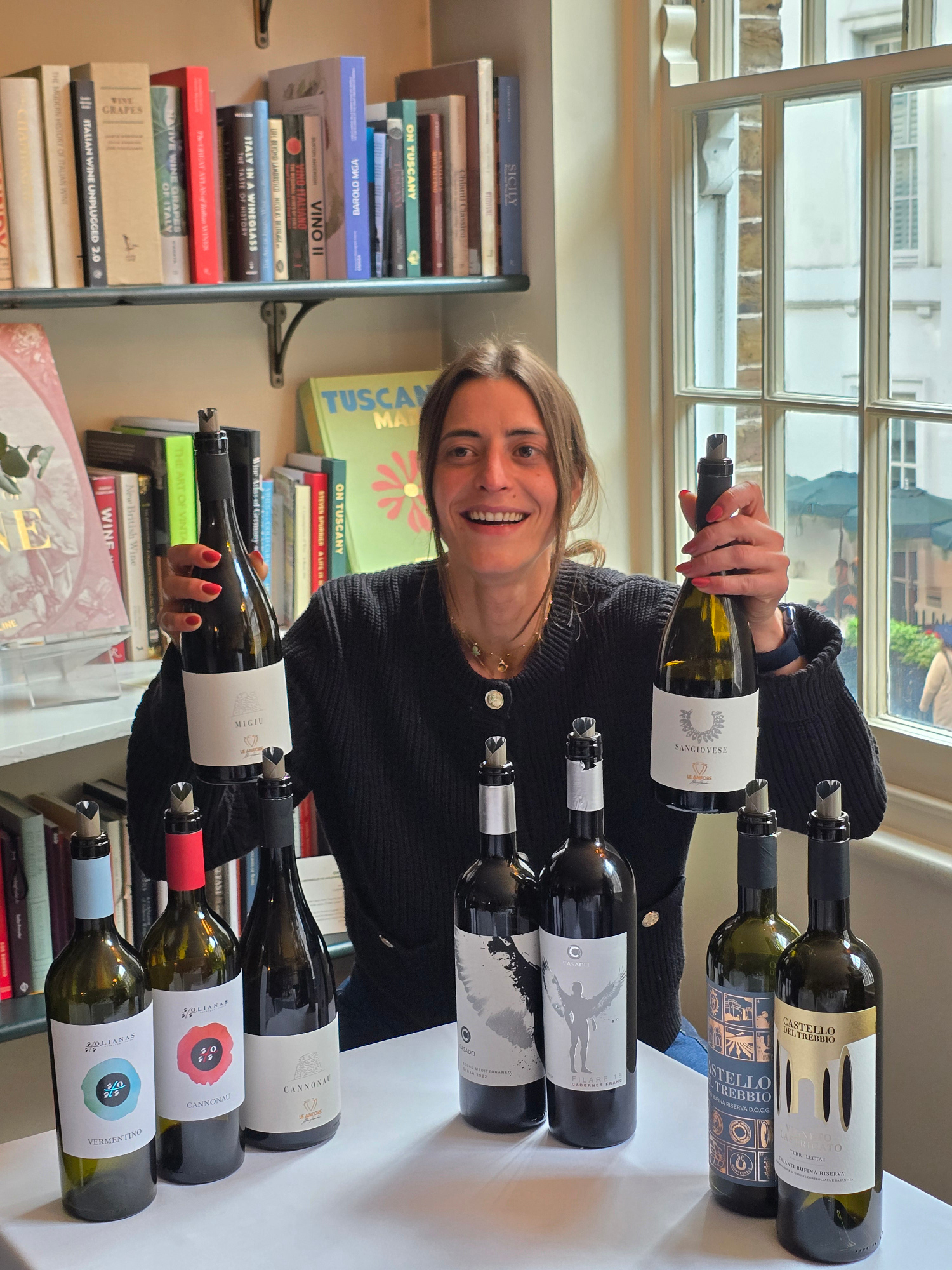
Elena Casadei with the wines sampled at DOPPO Soho
Conclusions
All these wines demonstrate the Casadei family's guiding principle of focussing on acidity and freshness to achieve "clean wines". Elena's amphora project builds on this idea, expressing her own personality to create contemporary styles with contemporary appeal. These are wines showing clarity, precision, energy and purity. They assert her ideas as a second generation winemaker, while still respecting the winemaking knowledge, expertise and experience of her father.
"People love the idea of wine", she says, "but when I decided to have my own project and be a winemaker, I decided to have my own style. I love the idea of being young and having a fresh, modern style. That's really what matters. I love this kind of wine." … and who can argue with that!
Famiglia Casadei wines are imported into the UK by Ellis of Richmond. You can also purchase them online from the Famiglia Casadei webshop.