Bordeaux Blanc: variety, refinement and affordability for any occasion

A selection of 'Everyday Bordeaux' white wines: image by Robin Goldsmith.
My last French wine article on these pages featured a Sauvignon Blanc from Bordeaux and described some of the typical characteristics of this style. However, other grapes are also used in ten AOCs (appellations d'origine contrôlées), so in this piece I want to illustrate the variety and versatility of dry Bordeaux Blanc in terms of aromas, taste sensations and food matches. Let's start with some background information to set the scene, before delving into some wines.
White wine has been made in Bordeaux for 1000 years and it was only in 1970 that red wine production surpassed that of white. Indeed, its global importance was such that in 1864, the first Sauvignon Blanc cuttings bound for California were taken from the region. According to the 2014 figures from the CIVB (Bordeaux Wine Council which represents the interests of the region's wine industry, incorporating growers, merchants and brokers), Bordeaux dry white wines now represent 9% of the total planted area (9,800 hectares), yielding around 64 million bottles of wine. This equates to 10.79% of total wine production in the region (Planète Bordeaux). Export sales are increasing year on year (32% since 2010), with the UK and the US now accounting for 16% and 11%, respectively.
Although there are probably three subdivisions of Bordeaux Blanc styles, these can be split into two principal expressions:-
- Refreshing and fruity dry white wines, typically greenish gold in colour with floral and citrus fruit aromas plus freshness and well-balanced acidity. These are usually drunk young and are perfect partners for lighter food. Most of these wines are from the generic Bordeaux, Entre-Deux-Mers or Côtes de Bordeaux appellations.
- Delicate dry white wine with more structure, greater complexity and ageing potential (8 years or longer), typically from the Graves and Pessac-Léognan appellations. These make great matches for Asian food and smoked fish, in particular.
Classic Bordeaux Blanc is based on a blend of the aromatic, floral, zesty Sauvignon Blanc, a grape variety thought to have originated in the region (although some experts consider it a Loire variety) and the fatter, richer, peach and honey notes of Semillon, the latter giving more structure, roundness and colour to the wine, along with an often oilier texture. Sauvignon Blanc, accounting for 55% of white grape plantings, grows well in Bordeaux's milder climate on limestone or clay soils. Here citrus and floral notes dominate, in contrast to the more grassy , herbal and acidic character of a Loire Sauvignon Blanc, for example. Semillon (34% of white grape plantings) prefers the well-drained clay, gravel or limestone soils of Graves, Pessac-Léognan and Côtes de Bordeaux. The third most planted varietal is Muscadelle (7%), grown mostly in Entre-Deux-Mers and Côtes de Bordeaux. This provides additional floral and musky orange zest aromas to blends, as well as softening out some of the acidic zestiness of Sauvignon Blanc. The remaining 4% of grape varieties are comprised of Colombard (sometimes used to improve ageing potential), Ugni Blanc, Sauvignon Gris, Merlot Blanc, Mauzac and Ondenc.
The ten AOCs are listed below, with production figures based on 2013 (Planète Bordeaux). Unless otherwise stated, wines are destined for drinking within two years.
- AOC Bordeaux
- AOC Entre-Deux-Mers
- AOC Graves
- AOC Pessac-Leognan
- AOC Côtes de Bordeaux, AOC Côtes de Blaye, AOC Côtes de Bourg, AOC Graves de Vayres, AOC Sainte-Foy-Bordeaux, AOC Côtes de Bordeaux Saint-Macaire
Given this diversity of aromas and tastes, it is no surprise that Bordeaux whites are suitable for a wide range of foods, from light starters to BBQs or more elegant meals.
In order to compare a range of these styles, I held a tasting for a happy bunch of wine drinkers, eager to sample six examples from the CIVB's 'Everyday Bordeaux' Selection, which comprises affordable wines priced between £6 and £20 RRP. Surprised by how different these wines proved to be, each one prompted many discussion points. Tasting notes are as follows, in order of tasting, with appellation, grape varieties, price and UK stockist shown:-
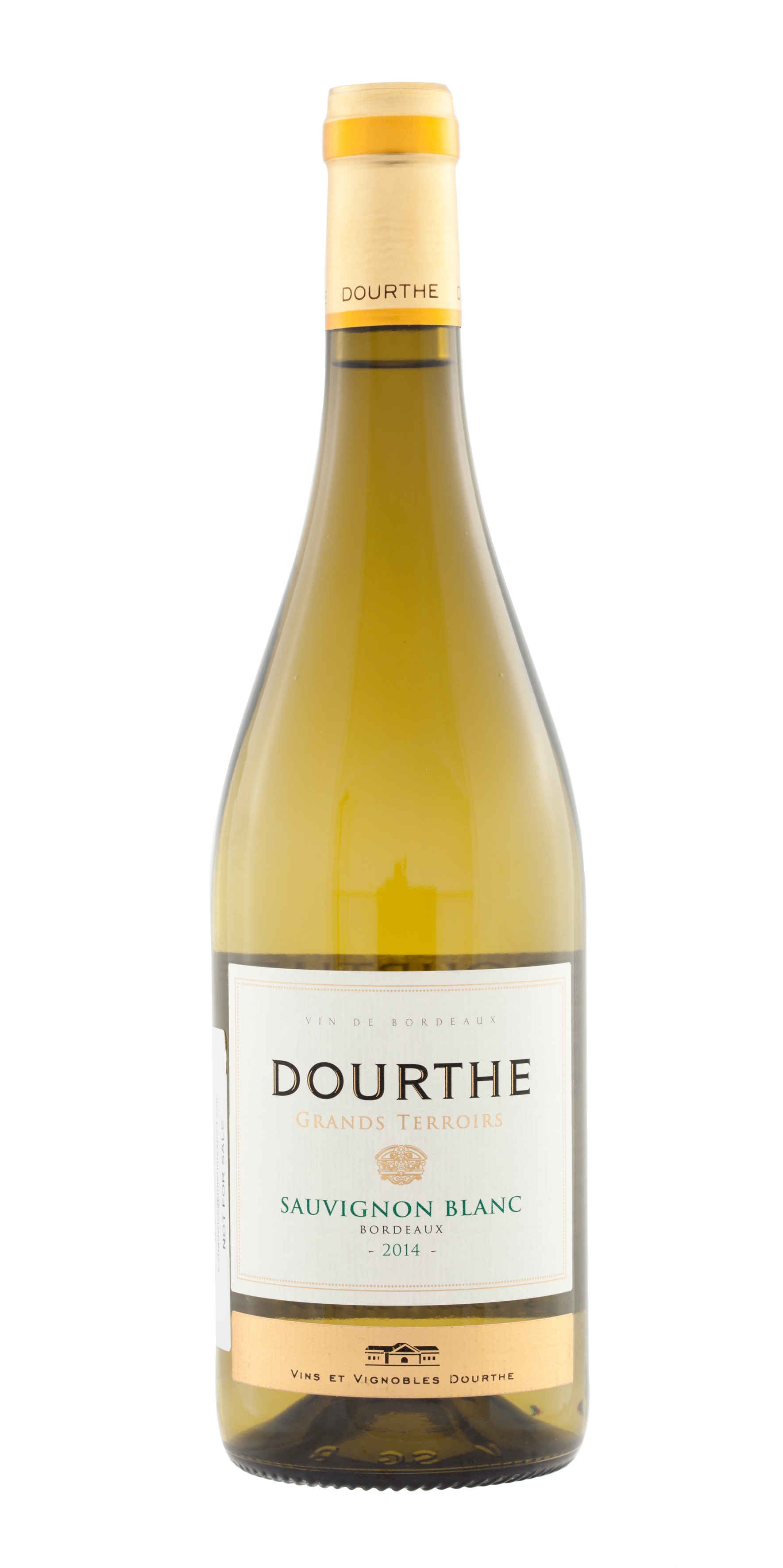
- Dourthe Grands Terroirs 2014 - Bordeaux - Sauvignon Blanc - £8.50 Oddbins
- Château Talmont 2014 - Bordeaux - Sémillon, Sauvignon Blanc - £8.00 ASDA
- Calvet La Fleur Baron 2013 - Bordeaux - Sémillon, Sauvignon Blanc - £8.50 ASDA
- Château Haut Rian 2013 - Entre-Deux-Mers - Sauvignon Blanc, Sémillon - £9.04 Nicolas/Spirited Wines
- Château du Druc 2012 - Graves - Sémillon, Sauvignon Blanc, Muscadelle - £13.99 Averys
- Domaines Denis Dubourdieu Clos Floridène 2012 – Graves - Sémillon, Sauvignon Blanc, Muscadelle - £19.00 The Wine Society


An interesting comment made by one of the attendees was that there is often no simple relationship between the price of wine and whether you enjoy it (as opposed to whether it is of good quality). None of those attending knew the bottle prices until the end, apart from the fact that they all ranged between £8 and £20 and most were expecting to pay more, particularly for the Château Haut Rian and La Fleur Baron. I chose a delicious mild and tangy Lancashire cheese plus a smooth Somerset Brie with Bath Oliver crackers to accompany the wines and to refresh the palate, yet another indication (if ever we needed it!) that white wine is often a much better partner for cheese than red wine. All in all, this was a successful tasting enjoyed by everyone who attended with much discussion prompted by all the wines.
All images provided by R&R Teamwork, unless otherwise indicated.
This article is also available on The Alcohol Professor website.